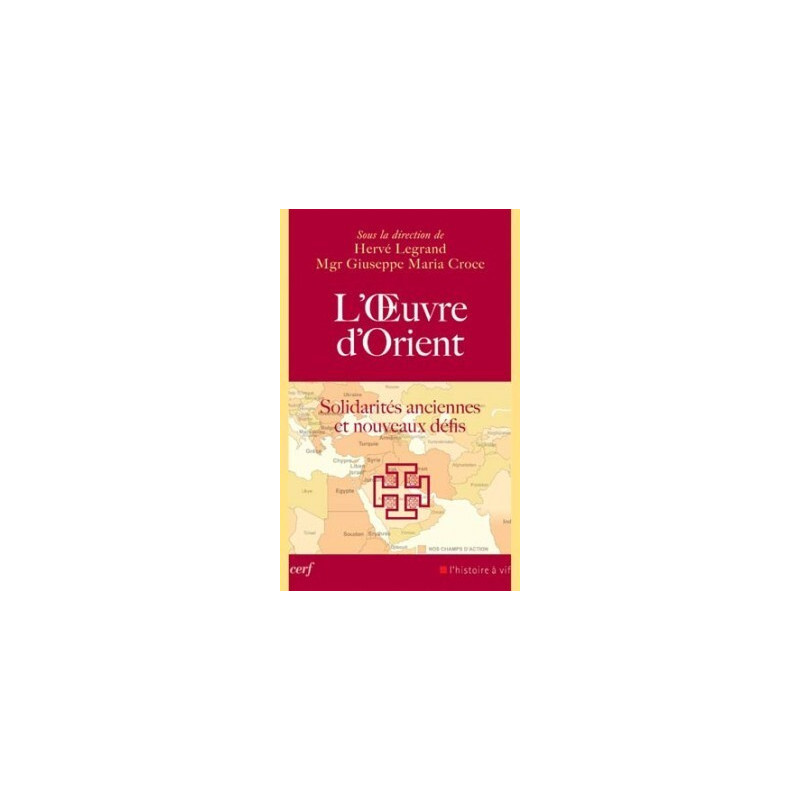


On ne peut pas parler des Chrétiens d'Orient sans mentionner l'Oeuvre d'Orient qui, dès sa création, est à leur service dans une région du monde où se concentrent d'importants défis.
Dans les entrechocs actuels, bien que minoritaires là où le christianisme est né, les chrétiens y restent des acteurs significatifs par leur ouverture culturelle et le sens du dialogue qu'ils puisent dans l'Evangile. A la faveur d'une émigration, pas toujours volontaire, de leurs fidèles, les Eglises orientales rayonnent même jusqu'en Occident.
Le grand public y trouvera des informations précises et claires sur la naissance de l'Oeuvre d'Orient et le contexte de son action aujourd'hui, comme naguère. Il y verra aussi la part étonnante prise parles congrégations religieuses françaises, masculines et féminines, l'évolution de l'Oeuvre d'Orient, de ses solidarités latine initiales à l'unionisme, puis à l'oecuménisme et ce que peut être le dialogue doctrinal avec l'islam.
Le statut de Jérusalem s'y voit consacrer un chapitre spécial.
La raison de l'émigration des chrétiens comme leur démographie sont éclairées.
For more than a hundred and fifty years, L’Œuvre d’Orient has been serving Christians who live in a region of the world which is facing important challenges today: the Middle East. The ecumenical dialogue is more than ever necessary there, as is coexistence between the three monotheistic religions. In spite of today’s violent situation in their land, and although they are a minority in the very place where Christianity was born, Christians remain important players because of their cultural openness and their sense of dialogue, drawn from the Gospel. Their Churches, as Cardinal Vingt-Trois writes in the preface, « are neither drawn into themselves or overcome by their ordeal ». Because of the emigration of their members – not always voluntary – their influence shines even in the West. This book consists of contributions from two conferences held in Paris and Rome in 2006 and attended by historians, theologians, sociologists and working brothers and sisters. It will be of interest to a wide public as well as more learned readers. The public in general, sympathetic to the cause of Christians in the Middle East, will find precise and clear information on the birth of L’Œuvre d’Orient and the context of its action today and in the past. They will also discover the astonishing role played by French religious congregations, both brothers and sisters; the evolution of L’Œuvre d’Orient, from its initial Latin solidarities to unionism, then ecumenism; and what may well become the doctrinal dialogue with Islam. A chapter has been devoted to the status of Jerusalem. The reason for the emigration of Christians and their demography are explained. Thanks to its extremely detailed index, this book will also serve as a useful tool for researchers, who are extremely active in this region today.
On ne peut pas parler des Chrétiens d'Orient sans mentionner l'Oeuvre d'Orient qui, dès sa création, est à leur service dans une région du monde où se concentrent d'importants défis.
Dans les entrechocs actuels, bien que minoritaires là où le christianisme est né, les chrétiens y restent des acteurs significatifs par leur ouverture culturelle et le sens du dialogue qu'ils puisent dans l'Evangile. A la faveur d'une émigration, pas toujours volontaire, de leurs fidèles, les Eglises orientales rayonnent même jusqu'en Occident.
Le grand public y trouvera des informations précises et claires sur la naissance de l'Oeuvre d'Orient et le contexte de son action aujourd'hui, comme naguère. Il y verra aussi la part étonnante prise parles congrégations religieuses françaises, masculines et féminines, l'évolution de l'Oeuvre d'Orient, de ses solidarités latine initiales à l'unionisme, puis à l'oecuménisme et ce que peut être le dialogue doctrinal avec l'islam.
Le statut de Jérusalem s'y voit consacrer un chapitre spécial.
La raison de l'émigration des chrétiens comme leur démographie sont éclairées.
Expédition sous 48h depuis Paris, emballage protégé.
Merci pour votre achat qui permet aux artisans chrétiens de vivre sur leurs terres.
Venez nous voir dans notre boutique à Paris. (Retrait gratuit, click and collect)
CB, Visa, Mastercard — transactions cryptées et protégées.